
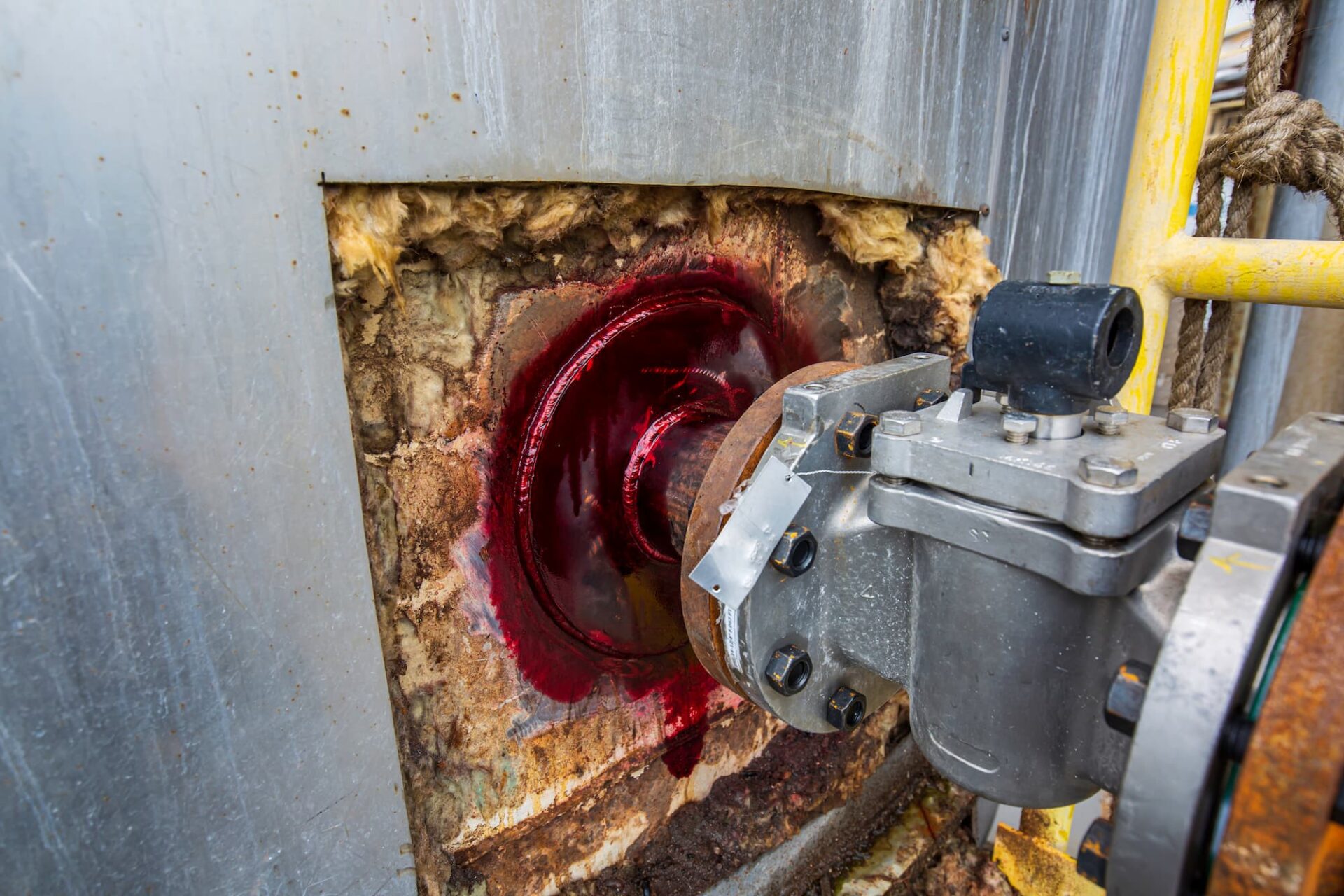
Liquid penetrant testing (LPT) has been around for decades, providing a portable, inexpensive, and quick detection of surface flaw defects. The test boils down to a straightforward eight-step process:
- Pre-cleaning to remove contaminants that could prevent penetrant flow.
- Penetrant application via aerosol, brush, or immersion.
- Penetrant dwell time to allow for seepage into surface defects.
- Excess penetrant removal via a solvent to aid developer application and inspection.
- A developer application to draw out the trapped penetrant for evaluation.
- Developer dwell time to ensure ample penetrant outflow.
- Inspection of visible or fluorescent penetrants to ascertain the presence of defects.
- Post-cleaning to remove any processing materials from the workpiece surface.
It’s worthwhile to realize that LPT can only detect the presence of surface flaws; a pipe or tube that passes LPT may still suffer from serious structural defects resulting from manufacturing or operating conditions. More thorough testing such as ultrasonic methods are often required.
While LPT may have a narrow scope in NDT, its ease of implementation from a cost and technical standpoint makes it a staple of any inspector’s toolkit, including ours at LTI. The November 2010 Quality Magazine article, “Basic Principles of Liquid Penetrant Inspection,” explains this test method in greater detail.
View PDF here
Other Related Articles
End-to-End Additive Manufacturing Testing, All Under One Roof
End-to-end additive manufacturing testing at Laboratory Testing (LTI), supporting AM programs from powder characterization to fully printed parts and builds.…
How Machine Shops Can Make Their Calibration Program Audit-Ready
Machine shops are seeing more audit findings tied directly to their calibration providers. The standards have not changed, but enforcement…
3 Ways to Keep Your Materials Testing Project Moving Efficiently
At LTI, we deliver best-in-class turnaround times, completing over 4,000 orders last year with an average of 3.39 days compared…
LTI Leads the Way with EB/NNS Level 3 Certification
As the Naval Shipbuilders Program moves toward full implementation in 2025, Laboratory Testing (LTI) stands out as a leader in…
Introduction to the ASTM E606 Standard
Low-Cycle Fatigue Testing and the Standards Set Forth by ASTM In the world of engineering, materials are often subjected to…
The Top 5 Consequences of Industrial Operations Not Calibrating Their Equipment
In the fast-paced world of industrial operations, precision is not just a goal—it’s a necessity. Calibration of equipment, a process…