
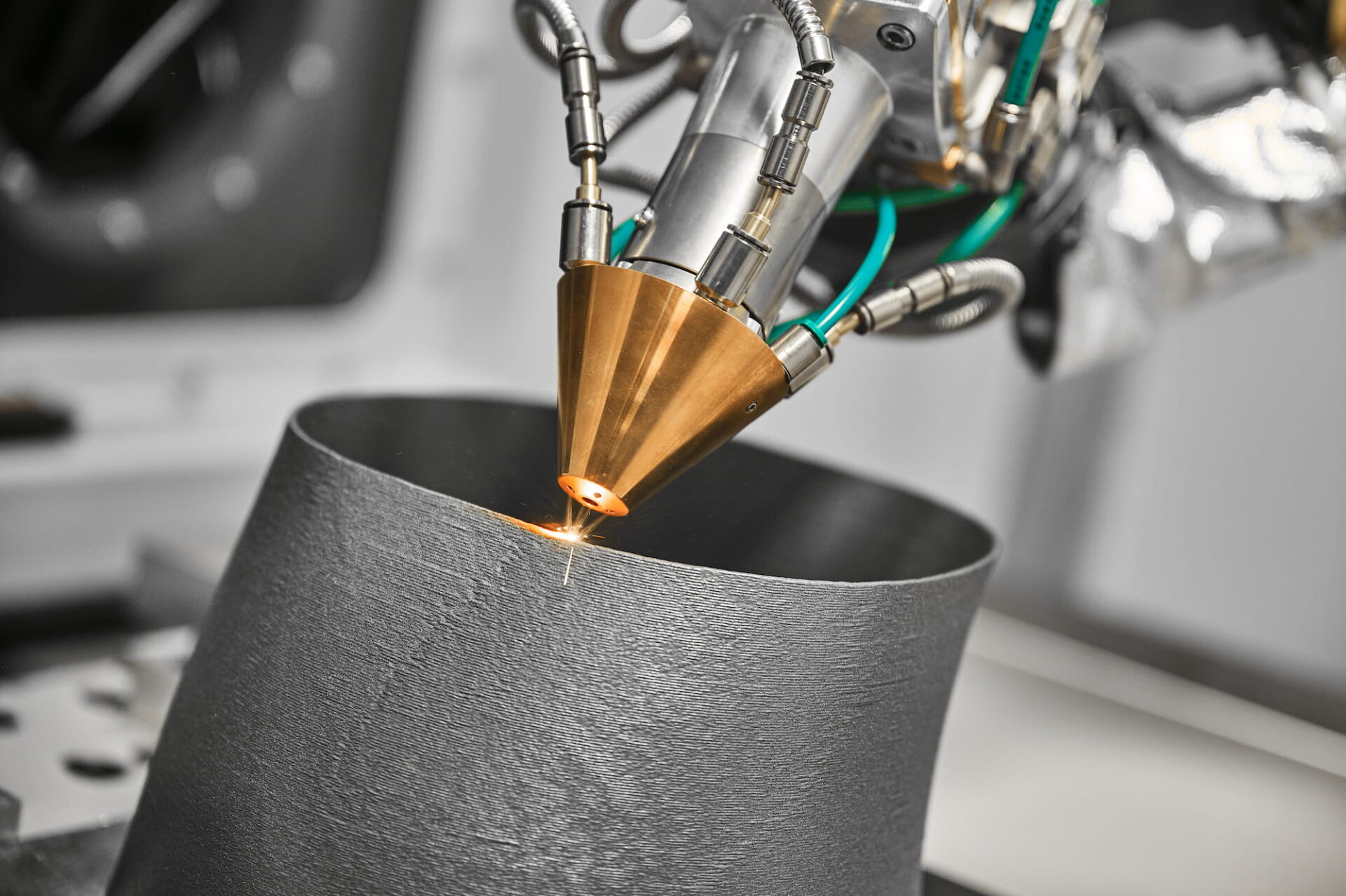
Additive manufacturing continues to reshape how mission critical components are designed, produced, and qualified. From aerospace and defense to energy and industrial applications, organizations rely on additive processes to create complex geometries, reduce weight, and accelerate production timelines.
But printing a part is only one step in the journey.
Ensuring that part meets mechanical, metallurgical, and compliance requirements is what determines whether it succeeds in real-world service. That is where Laboratory Testing (LTI) delivers unmatched value.
Complete Additive Manufacturing Testing Capabilities
At Laboratory Testing (LTI), additive manufacturing testing is not treated as a single service. It is a fully integrated workflow that supports customers from powder verification through final part qualification.
Our comprehensive capabilities include:
- Powder characterization to verify chemical composition and physical properties before the build
- Machining, extraction, and specimen preparation performed in house
- Destructive testing including tensile, fatigue, fracture toughness, hardness, and impact testing
- Metallography and microstructural analysis
- Non-destructive testing such as digital radiography and ultrasonic inspection using our ScanMaster UT tank
- Corrosion testing and environmental simulation where required
- Calibration and dimensional verification services
Because these services are centralized under one roof, customers eliminate the inefficiencies that come with coordinating multiple outside vendors.
Powder to Part Qualification
The additive process begins long before a component is printed. Powder quality directly affects density, strength, fatigue life, and overall performance.
LTI performs powder characterization to verify:
- Chemical composition
- Particle size distribution
- Flow characteristics
- Contamination levels
By confirming powder integrity upfront, manufacturers reduce the risk of downstream failures and costly rework.
Once parts are printed, our team handles machining, specimen extraction, and preparation. This ensures testing samples accurately represent the build and meet applicable industry standards.
From there, destructive testing evaluates mechanical properties under real world conditions. Whether your program requires tensile strength validation, fatigue life assessment, or fracture toughness analysis, LTI delivers precise, accredited results that support certification and compliance requirements.
Integrated Non-Destructive Evaluation
Many additive programs require both destructive and non-destructive testing. Coordinating those services across separate providers can introduce delays and communication gaps.
LTI’s non-destructive testing team supports additive customers with:
- Digital radiography for internal defect detection
- Ultrasonic testing using advanced immersion systems
- Visual and dimensional inspections
- Additional NDT methods based on program requirements
Our ScanMaster UT tank provides high resolution inspection capabilities that are particularly valuable for complex additive geometries.
Because destructive and non-destructive teams operate within the same facility, communication is seamless and turnaround times are optimized.
Eliminating Vendor Handoffs
One of the biggest challenges in additive manufacturing qualification is managing multiple vendors. Each handoff introduces risk:
- Shipping delays
- Documentation inconsistencies
- Miscommunication about standards or test methods
- Lost time between phases of testing
LTI’s end-to-end model removes those barriers. Your material stays within a controlled environment from start to finish. Our internal teams coordinate directly, ensuring clear documentation, consistent reporting, and full traceability throughout the process.
For mission critical programs where timelines matter and compliance is non negotiable, that efficiency becomes a competitive advantage.
Faster Turnaround for Critical Programs
Additive manufacturing is often chosen to accelerate development cycles. Testing should support that speed, not slow it down.
Because LTI centralizes machining, preparation, destructive testing, non-destructive testing, and supporting services, we reduce scheduling friction and compress overall timelines. Customers benefit from:
- Shorter overall project durations
- Improved communication between technical teams
- Reduced administrative coordination
- Greater confidence in data integrity
For aerospace and defense programs in particular, where qualification requirements are rigorous and documentation must withstand audit scrutiny, an integrated approach simplifies compliance.
Why Additive Manufacturing Testing Matters
Additive components frequently operate in high stress, high temperature, or safety critical environments. Mechanical performance cannot be assumed based solely on design intent.
Testing validates:
- Structural integrity
- Material consistency
- Long term durability
- Resistance to crack growth and fatigue
- Conformance to customer and industry standards
Without thorough testing, additive innovation cannot transition into reliable production.
LTI partners with customers to ensure their additive programs move from concept to certified hardware with confidence.
A True All Under One Roof Solution
The phrase “all under one roof” is more than a tagline. It reflects how Laboratory Testing (LTI) has structured its capabilities to serve modern manufacturing demands.
By combining powder characterization, machining, destructive testing, non-destructive evaluation, metallography, corrosion testing, and calibration services within a single coordinated facility, LTI delivers a streamlined experience that supports both efficiency and quality.
Whether you are qualifying a new additive material, validating a complex build, or preparing documentation for regulatory review, our integrated team provides the technical depth and responsiveness your program requires.
Additive manufacturing is evolving quickly. Your testing partner should be equipped to evolve with it.
To learn more about LTI’s complete additive manufacturing testing capabilities, visit the full blog article and connect with our team to discuss your program requirements.
Watch the AM Capabilities Video
See our labs, equipment, and experts in action in our Brand Ambassador video:
https://labtesting.com/lti-brand-ambassador/
Take the Next Step
Explore AM Testing Capabilities: https://labtesting.com/services/additive-manufacturing-testing/
Request a Quote: https://labtesting.com/quote/
Explore LTI’s full additive manufacturing testing capabilities and connect with our team to discuss your next project.
Other Related Articles
How Machine Shops Can Make Their Calibration Program Audit-Ready
Machine shops are seeing more audit findings tied directly to their calibration providers. The standards have not changed, but enforcement…
3 Ways to Keep Your Materials Testing Project Moving Efficiently
At LTI, we deliver best-in-class turnaround times, completing over 4,000 orders last year with an average of 3.39 days compared…
LTI Leads the Way with EB/NNS Level 3 Certification
As the Naval Shipbuilders Program moves toward full implementation in 2025, Laboratory Testing (LTI) stands out as a leader in…
Introduction to the ASTM E606 Standard
Low-Cycle Fatigue Testing and the Standards Set Forth by ASTM In the world of engineering, materials are often subjected to…
The Top 5 Consequences of Industrial Operations Not Calibrating Their Equipment
In the fast-paced world of industrial operations, precision is not just a goal—it’s a necessity. Calibration of equipment, a process…
The Benefits of Choosing a Calibration Company that Offers Instrument Replacement and Purchasing Services
In the demanding world of industrial manufacturing and quality assurance, selecting the right calibration partner can significantly impact your operational…